Only Organic

Food you can trust. Deliverd

Soil Association Organic Standard - License no: DA 14062

Image of organic courgettes

Asparagus

Asparagus is a very interesting vegetable, especially if you are scientifically inclined. There are reasons why chefs insist it must be eaten as fresh as possible and therefore why English is best – it’s not only down to food miles. Fresh from the soil, asparagus is particularly juicy and sweet at around 4% sugar, but after harvest the spears continue to consume the sugar and the flavour begins to dull. Moisture is gradually lost causing the stem to harden from the base up. So get it local and cook it quick!!

I know it can be expensive. Asparagus can only be harvested by hand, the plants do not yield useful crop until they are about 3 years old and are spent by the age of 10. However, I think, considering the short season, it is worth the expense at least once a year.

Finally, more science and a bit of literature. May I quote Marcel Proust (In Search of Lost Time) “transforming my chamber pot into a vase of aromatic perfume”. Many of you will have noticed this almost instantaneous phenomenon and probably are not so keen on the funky smell as Proust was! Asparagus contains the sulphur compound methanethiol – a close relative to skunk spray. Some people are not genetically capable of metabolising the compound and therefore do not have stinky urine after dinner. Others cannot smell the compound. The two are not mutually exclusive so even if you can’t smell it……

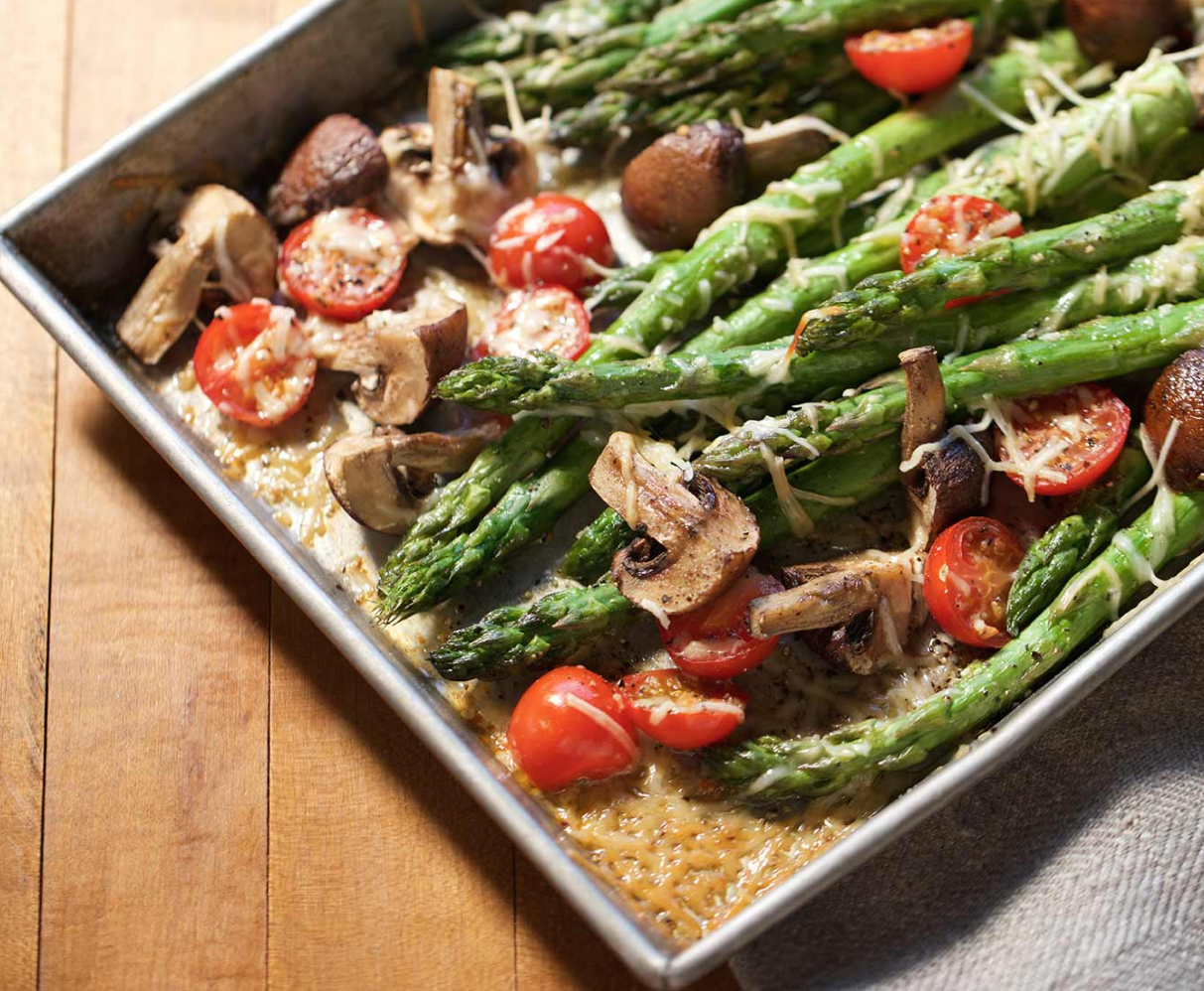
STEAMED ASPARAGUS WITH BALSAMIC DRIZZLE AND PARMESAN

Asparagus – as much as you want per person
Balsamic Vinegar – a cheap bottle
Salt
Parmesan, Pecorino or other similar hard cheese

First make the balsamic glaze. Put the bottle of balsamic into a saucepan, bring to the boil and simmer gently until reduced to about a quarter of its volume – so it is coatingly syrupy. It will thicken further when it cools, so bear this in mind. If you do go too far it can be rescued by adding a bit of water. It will keep for months in the fridge so do the whole bottle and use the rest on salads etc.

Trim the asparagus to cut away any very woody parts at the base. If you have an asparagus steamer, all well and good, but an ordinary one will do. Otherwise, heat about a centimetre of water in a frying pan and cook the spears in one layer. Steam for a few minutes until just tender – you can check with the point of a knife. Don’t overcook it!! Soggy asparagus is not nice.

Serve immediately with the balsamic glaze drizzled over, a sprinkling of salt and some shaved or grated parmesan. Its ok to use your fingers!

Regards
The Gourmet Doctor